

New Research Challenges the Future of Python in the Age of AI
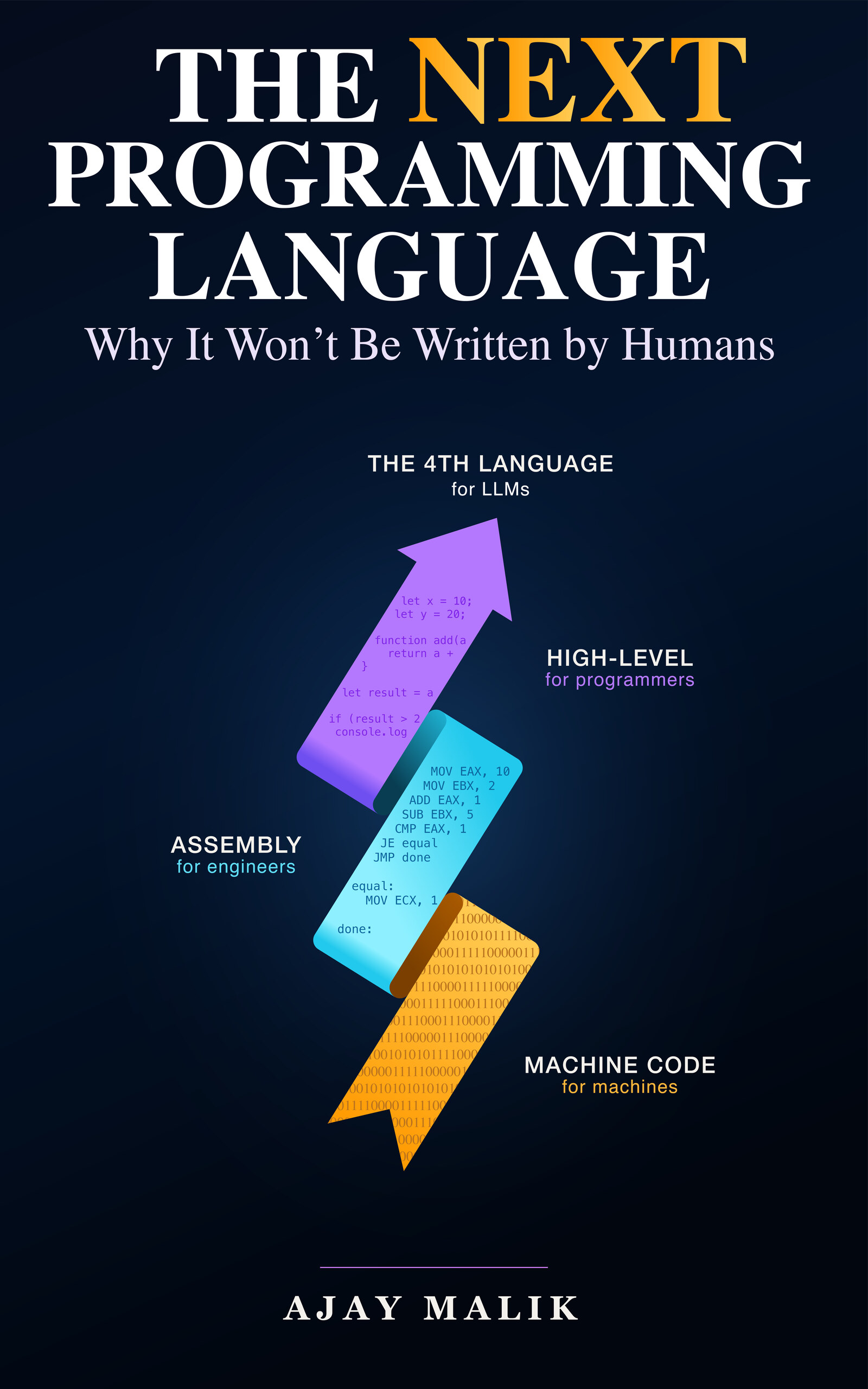
The Next Programming Language
Study reveals reveals 505× token overhead in AI code repair, raising questions about the cost and efficiency of machine-written code.
If AI is writing and fixing code, why make it use languages designed for humans? We need programming languages built for AI, with dramatically better token efficiency.”
SAN JOSE, CA, UNITED STATES, November 2, 2026 /EINPresswire.com/ -- StudioX AI today announced research challenging a fundamental assumption in artificial intelligence: that machines should continue writing software in programming languages such as Python, JavaScript, and C++, which were originally designed for human programmers.— Ajay Malik
As technology companies invest billions in developing more powerful AI models, StudioX AI's findings suggest that significant improvements in AI coding efficiency and reliability may come from rethinking programming languages themselves.
In one experiment, an AI model generated 3,032 tokens to deliver a software correction requiring just six tokens—505 times the minimum correction size. Approximately 99.7% of the output reproduced code that was already correct.
The findings are documented in The Next Programming Language: Why It Won't Be Written by Humans, which also introduces AIR, an experimental programming language designed for machine-authored software.
Research Exposes Hidden Costs and Reliability Problems
StudioX AI's research identifies three significant challenges in current AI coding workflows:
* 505× token overhead: When correcting the same bug in progressively larger programs, AI output increased from 222 to 3,032 tokens despite the underlying correction remaining unchanged. Requesting smaller patches reduced token usage, but 15 of 24 patches failed to apply successfully.
* 40% to 100% repair success: Across 180 attempts, providing explicit information about violated software rules and permitted corrections increased AI repair success from 40% to 100%. The less expensive model improved from 23% to 100%, suggesting that better diagnostics can sometimes deliver greater benefits than using a more powerful model.
* Six of nine bugs went undetected: Conventional checks using Python, mypy in strict mode, and C with strict compiler warnings failed to detect six of nine deliberately introduced defects. The programs could execute normally while producing incorrect results.
Together, these findings suggest that programming-language design, rather than model capability alone, may be a critical factor in the cost and reliability of AI-generated software.
“We keep investing in making AI models better at writing code, but we're still asking them to use languages designed for human programmers,” said Ajay Malik, CEO of StudioX AI. “If machines are becoming the authors of software, we need to rethink the language itself—not just the intelligence of the model.”
AIR: A Programming Language Built for AI
To explore an alternative, StudioX AI introduces AIR, an experimental programming language designed around the needs of machine-generated software. AIR incorporates stable code identities, explicit software contracts, actionable diagnostics, and verification mechanisms intended to support precise code modifications without unnecessary regeneration. Unlike a theoretical proposal, AIR is a working implementation capable of parsing, verifying, compiling, and executing programs.
The research raises a broader possibility: the next major advance in AI software engineering may come not simply from larger models, but from programming systems designed specifically for machines.
Research Published in The Next Programming Language
The findings are documented in The Next Programming Language: Why It Won't Be Written by Humans, authored by StudioX AI CEO Ajay Malik. The publication includes eight reproducible research labs, experimental results, and the design and implementation of AIR. The experiments involved small programs, with the largest repair benchmark containing 1,408 tokens, and two AI models from one vendor. Results reflect the tested conditions rather than universal comparisons across programming languages. The 505× figure represents measured code-repair output overhead, not a demonstrated efficiency improvement of AIR over Python.
The book is available in paperback and Kindle editions.
Research and evidence: https://www.thenextprogramminglanguage.com/evidence
Book: https://www.thenextprogramminglanguage.com/
Patrick Gilberg
Studiox-ai.com
+1 406-802-4316
patrick.gilberg@studiox-ai.com
Legal Disclaimer:
EIN Presswire provides this news content "as is" without warranty of any kind. We do not accept any responsibility or liability for the accuracy, content, images, videos, licenses, completeness, legality, or reliability of the information contained in this article. If you have any complaints or copyright issues related to this article, kindly contact the author above.
